
NVIDIA RTX 3090
10,496
CUDA Cores
24GB
VRAM
936
GB/s
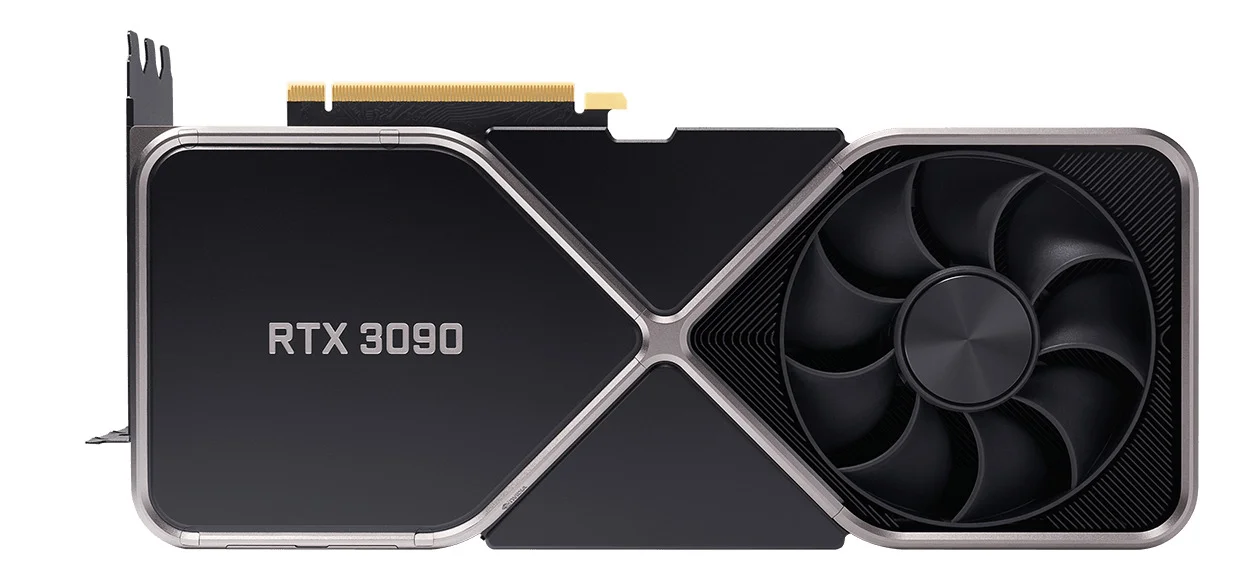
Technical Specifications
10,496
CUDA Cores
1395
Base MHz
1695
Boost MHz
24GB GDDR6X
384-bit bus
Performance
35.6
FP32 TFLOPS
71.2
FP16 TFLOPS
350W
TDP
Cloud Availability
5
Available Instances
$0.10/hr
Starting Price
Detailed Specifications
| Architecture | Ampere (Unknown) |
| Release Date | 2020-09-24 |
| Launch Price | $1,499.00 |
| Process | 8nm |
| Transistors | 28.3B |
AI Features
Gen 3
Tensor Cores
Disabled
Transformer Engine
Not Supported
Flash Attention
Physical Specifications
Dimensions
12.3in
Length
5.4in
Width
3-slot
Height
About RTX 3090 GPU
The NVIDIA RTX 3090 was introduced in 2020 on the Ampere architecture. Its specification combines 10,496 CUDA cores with 24GB of GDDR6X, which defines both the workloads it can run and the batch sizes it can hold.
Based on its 24GB memory capacity, the RTX 3090 is best evaluated for model fine-tuning, production inference, image generation, and multi-GPU development. Always size the model, optimizer state, KV cache, and framework overhead together rather than choosing a GPU from core count alone.
GPUvec currently tracks 5 cloud listings for the RTX 3090, with the lowest observed hourly rate at $0.10. Prices and availability can change by provider, region, and instance configuration, so verify the final rate before starting a workload.
For software planning, the RTX 3090 combines 936 GB/s of memory bandwidth, CUDA compute capability the latest, and a 8nm manufacturing process. Confirm the minimum CUDA, PyTorch, TensorFlow, or driver version required by your application before renting or purchasing hardware.
Rent RTX 3090 from Our Partners
Get started quickly with these trusted GPU cloud providers. We may earn a commission when you sign up.
External Resources
Learn more about GPUs from these authoritative sources:
Official CUDA programming guide
NVIDIA GPU Specifications →Official NVIDIA GPU specs
TechPowerUp GPU Database →Comprehensive GPU specifications
CUDA Compute Capability Guide →GPU compute capability reference
What You Need to Know About the RTX 3090
Complete Specifications for the NVIDIA RTX 3090
The NVIDIA RTX 3090 uses the Ampere architecture and combines 10,496 CUDA cores with 24GB of GDDR6X. GPUvec records 936 GB/s memory bandwidth alongside architecture, release date, process node, accelerator features, and physical specifications so the page can be evaluated from source data instead of model-name assumptions.
Compare NVIDIA RTX 3090 Cloud Rental Prices per Hour
GPUvec currently tracks 5 cloud listings, with an observed starting rate of $0.10 per hour. Provider rates can vary by region, host configuration, billing model, and availability. Use the provider directory and related-GPU links to compare an available alternative when this exact accelerator is not listed.
Is the NVIDIA RTX 3090 the Right GPU for Your AI Workload?
Start with the 24GB memory limit, then evaluate 936 GB/s memory bandwidth, compute features, and software compatibility for your workload. Model weights, KV cache, activations, optimizer state, and framework overhead all consume memory. Compare this page with related accelerators rather than assuming that a higher core count alone guarantees a better training or inference result.
Top GPUs for Training and Inference
| Category | Rank 1 | Rank 2 | Rank 3 |
|---|---|---|---|
| Best for Training | NVIDIA H200 | NVIDIA H100 | NVIDIA B200 |
| Best for Inference | NVIDIA A40 | NVIDIA A100 | NVIDIA A10 |
Compare GPU specifications and cloud instances to find the best GPU for your workload.